Jump to content

Overview of treatment results in 2024

Treatment Cycles and Methods

In 2024, the MVZ conducted over 2,644 assisted reproduction (ART) treatment cycles. These included:

  • 1,329 follicular punctures for IVF or ICSI therapies
  • 284 follicular punctures for social or medical egg freezing
  • 1,031 thaw cycles

Almost half of all treatments were performed with cryopreserved gametes.


Pregnancy Rates
  • For IVF and ICSI therapies, average pregnancy rates of 40% were achieved across all age groups.
  • For so-called “ideal patients” (≤ 37 years, first treatment cycle, AMH ≥ 1.0, at least 4 pronuclear stages, use of fresh or cryopreserved sperm), the pregnancy rate in ICSI therapies was 54.3%.

Success rates decline continuously with increasing female age, making age a decisive factor for treatment outcomes.


Multiple Pregnancies and Quality Goals

In addition to high pregnancy rates, reducing multiple pregnancies has become a central quality criterion. The goal is the birth of a healthy child with minimal risk.

  • After transfer of 2 blastocysts, the multiple pregnancy rate across all age groups was 27%.
  • For twin pregnancies, the preterm birth rate in 2022 was 76.5% (German IVF Register DIR).
  • To avoid multiple pregnancies, single embryo transfer (SET) is increasingly used.
  • In 2024, 86% of our fresh transfers were performed as SET, achieving pregnancy rates equivalent to the transfer of two blastocysts.


Embryonic Development and Laboratory Techniques

Embryo development on day two or three is only partially predictable. Physiologically, implantation occurs at the blastocyst stage in the uterine cavity.

  • In the laboratory, embryonic development is monitored over five days to transfer the optimal blastocyst on day 5.
  • By using state-of-the-art laboratory technology, particularly the EmbryoScope incubator system with AI-assisted assessment (IDA score), high pregnancy rates can be achieved with single embryo transfer.

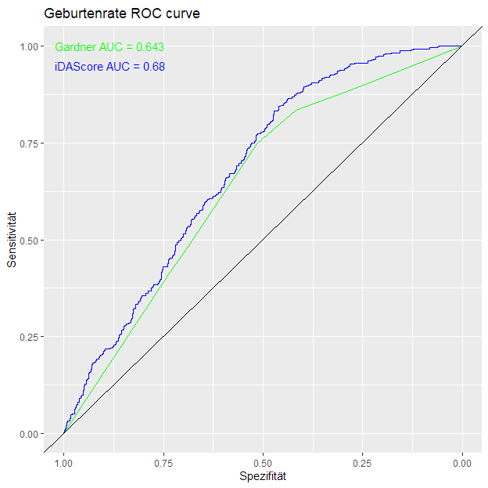
iDAScore und Gardner Score ROC Curve

In the Embryoscope, the division behaviour of the embryo is continuously recorded using time-lapse photography under stable culture conditions. The various morphological changes are evaluated using a neural network (iDAScore). After examining a large number of embryos, this accumulated data was then correlated with clinical parameters such as the birth rate after implantation of a single embryo. Compared to the subjective morphological assessment by biologists (Gardner score), this score, which is determined objectively using artificial intelligence (AI), is generally more reliable in terms of prognosis and therefore also has a higher predictive value (ROC-AUC 0.68 vs. 0.64; see graph), see also the publication from our centre attached below.

iDAscore 6,3

J Assist Reprod Genet. 2023 Sep;40(9):2129-2137

iDAScore 9,4