Jump to content

Examination of artificially inseminated embryos

Preimplantation genetic diagnosis gives couples the hope of giving birth to a healthy child – even if there are known genetic disorders or if serious health problems are expected in the baby. We are one of the first centres in Germany that can examine embryos from artificial insemination using PGD. Our experienced doctors will expertly guide you through this process.

What is PGD? 

PGD is the genetic diagnosis of embryos that can only have been created by in-vitro fertilisation (IVF/ICSI). We specifically look for genetic anomalies or a chromosomal disorder – before the embryo is implanted in the uterus, i.e. before the possible beginning of a pregnancy. In Germany, PGD may only be performed under certain conditions and with the approval of an ethics committee.

How can PGD help you? 

PGD is considered for couples who have a high risk of a serious hereditary disease due to their genetic constitution. Then we examine whether the embryo also has the genetic change known in the family. It is only transferred to the uterus when it does not have it. However, PGD may only examine genetic changes that have a high probability of causing a stillbirth or miscarriage.

Why a PGD with us? 

At our fertility centre you will benefit from more than 40 years of experience in in-vitro fertilisation. Our quality management system is certified by TÜV. Our specialists accompany you throughout the entire PGD process, which we perform in cooperation with the Medical Genetic Centre in Munich (MGC). The MGC is a leader in human genetic diagnostics in Germany. 

For which diagnoses can PGD be useful?

Medical literature cites various indications for PGD: hereditary predisposition in the family to monogenic diseases such as myotonic dystrophy, Huntington's disease, cystic fibrosis, spinal muscular atrophy, sickle cell anaemia, beta thalassaemia, epidermolysis bullosa, fragile X syndrome, recurrent miscarriages due to a parental chromosome change (balanced translocation) or recurrent implantation failure in IVF. In Germany, an ethics committee decides on a case-by-case basis whether PGD may be performed.

Find out more about the detailed procedure:

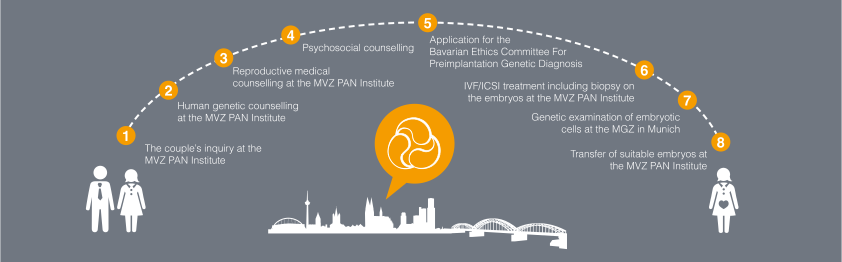
1.Request of couple

If you or members of your family are affected by genetic predispositions or diseases, we will be happy to inform and advise you about the possibilities of PGD. Call on 0221-2776-200 or email repro@pan-klinik.de

2.Human genetic counselling

In this consultation we will ask you, in particular, about known diseases and create a family tree over three generations. We will also discuss possible prenatal examinations and which ones are appropriate for you. Depending on the findings and where they were collected, a new genetic test may be required. This is usually done in the laboratory that is also to perform the PGD. 

3.Reproductive medicine consultation

During the consultation and examination, we will clarify whether you meet the requirements for PGD. To do this, we examine your ovarian functional reserve by means of vaginal ultrasound and antral follicle count (AFC), in particular and draw up a spermiogram.

4.Psychosocial counselling

Before undergoing the PGD, you must be informed in detail about its medical, psychological and social consequences. This psychosocial counselling is performed at our fertility centre by a doctor who is not himself involved in carrying out the PGD. It is the precondition for everything else. 

5.Application to the Bavarian ethics committee for preimplantation diagnostics

After your case has been assessed by the Medical Genetic Centre (MGC) in Munich, you apply for PGD to the Ethics Committee. We and also our colleagues at the MGC in Munich will be happy to support you. The costs for the registration are between €180.00 and €300.00. 

The law stipulates that the woman (from whom the oocyte is derived) must apply for PGD to an interdisciplinary ethics committee. This body decides on the basis of genetic, psychological, social and ethical aspects whether the legal requirements for PGD are met and whether it may be performed. The Bavarian ethics committee responsible for preimplantation genetic diagnosis consists of eight members from different disciplines: four doctors (specialising in reproductive medicine, human genetics, paediatrics, psychiatry/psychotherapy), a lawyer, an ethicist, a patient representative and the representative of a self-help organisation for people with disabilities.
 

6.IVF/ICSI treatment with embryo biopsy

After a positive decision by the ethics committee, your treatment can begin. In order to be able to examine embryos, they must be created outside the body. This is done by stimulating the woman's ovaries and removing the oocytes in a minor procedure. The oocytes are fertilised by ICSI irrespective of the result of the spermiogram, so that no interfering DNA is picked up during the subsequent biopsy of the embryo.

The fertilised oocytes give rise to embryos, which we incubate in the embryoscope. On the third day, we perforate the outer shell (zona pellucida) of the embryo at one point with a laser. In the case of the blastocyst, a biopsy can then be taken here. For this purpose, we fix each embryo under the microscope in order to be able to separate about eight cells using a laser. 

7.Genetic investigation on cells of the embryo at MGC Munich

We send the obtained samples to the MGC in Munich. The embryos themselves are frozen (cryopreservation) and stored until use.

Before PGD is performed, it must be clarified whether it is technically possible to reliably detect your known mutation(s) - even if only one or a few cells are examined. As a rule, we will accordingly have to take blood from you again, which will be analysed accordingly at the MGC in Munich. This step is usually performed once before the first PGD. In very rare cases, we may not be able to offer you a PGD for methodological or technical reasons.

8.Transfer of a suitable embryo

As soon as the result of the PGD is available, we know which embryo is not affected by the genetic disease in the family – and is accordingly eligible for transfer to the uterus. There may also be no suitable embryo. 

If an embryo is suitable, it is first thawed and, after a light hormonal pre-treatment, transferred into the uterus with a thin catheter. This is a minor procedure that does not require an anaesthetic. After a short break you can drive home.

Who performs the PGD?

We perform PGD in cooperation with our partner, the Medical Genetic Centre (MGC) in Munich. This cooperation is certified by the Bavarian State Ministry for Health and Care. The human genetic and reproductive medical consultation of the couples as well as the IVF/ICSI treatment with biopsy of the embryos takes place in our MVZ PAN Institute in Cologne. The analysis of the cells (PGD) takes place at the MGC in Munich. We receive the final test results to discuss with the couples. If there is a healthy embryo, we can place it in the woman's uterus. 

That's how much a PGD costs?

Chromosomal alteration: The costs for the creation and examination of an embryo amount to approx. €1,200.00 per cycle. For each additional embryo examined (in this cycle), €530.00 will be due (as of August 2017). 
Molecular genetic testing: The first step is to determine the specific change known in you or your family. The costs for this are usually only one-time and amount to approx. €3,100. The subsequent PID cycle costs approximately €2,100 (as of August 2017).
Human genetic counselling: All costs are incurred for this as well.
Cost absorption by health insurance companies is not common and must be applied for on a case-by-case basis.

Polypore extraction or trophectoderm biopsy?
  • In in vitro fertilisation (IVF/ICSI), there are two ways to obtain the cells required for PGD: by removing the polar bodies to analyse the genetic material of the pre-embryo or by performing a trophectoderm biopsy at the embryonic blastocyst stage.
  • Both polar bodies are formed during the maturation of the egg cell and are only present in pairs after the sperm cell has penetrated. The two pronuclei (PN) then form. In polar body diagnosis (PBD), both polar bodies must be examined in order to draw conclusions about the complete chromosome set or the mutation status of the egg cell. However, it is not always possible to remove both polar bodies completely, as one of them is often fragmented. The procedure only allows the diagnosis of diseases that can be inherited from the mother.
  • During trophectoderm biopsy, 6 to 8 cells can be removed, which generally allows for a more precise diagnosis. After the polar bodies have been removed, the resulting embryos are cultured to the blastocyst stage. This procedure enables the diagnosis of diseases that can be inherited from both the mother and the father. However, unlike polar body diagnosis, it requires the approval of the ethics committee.
  • After the cells have been removed, the pronuclei or blastocysts are cryopreserved (vitrification) until the PGD results are available. PGD itself is generally performed using molecular genetic methods (NGS, etc.).

Lecture on the topic of preimplantation genetic diagnosis
Dr. Stefan Palm on the topic of preimplantation genetic diagnosis at the Interdisciplinary Symposium at Maternushaus in Cologne 2018.

Do you have questions or would like to book an appointment?

Book a first consultationRegister for information evening

+49 (0) 221 2776 200  |  kinderwunsch@mvz-pan-institut.de

A close-up of white orchid flowers in a decorative arrangement, with soft-focus wooden chairs visible in the background. The scene conveys a serene and welcoming atmosphere.
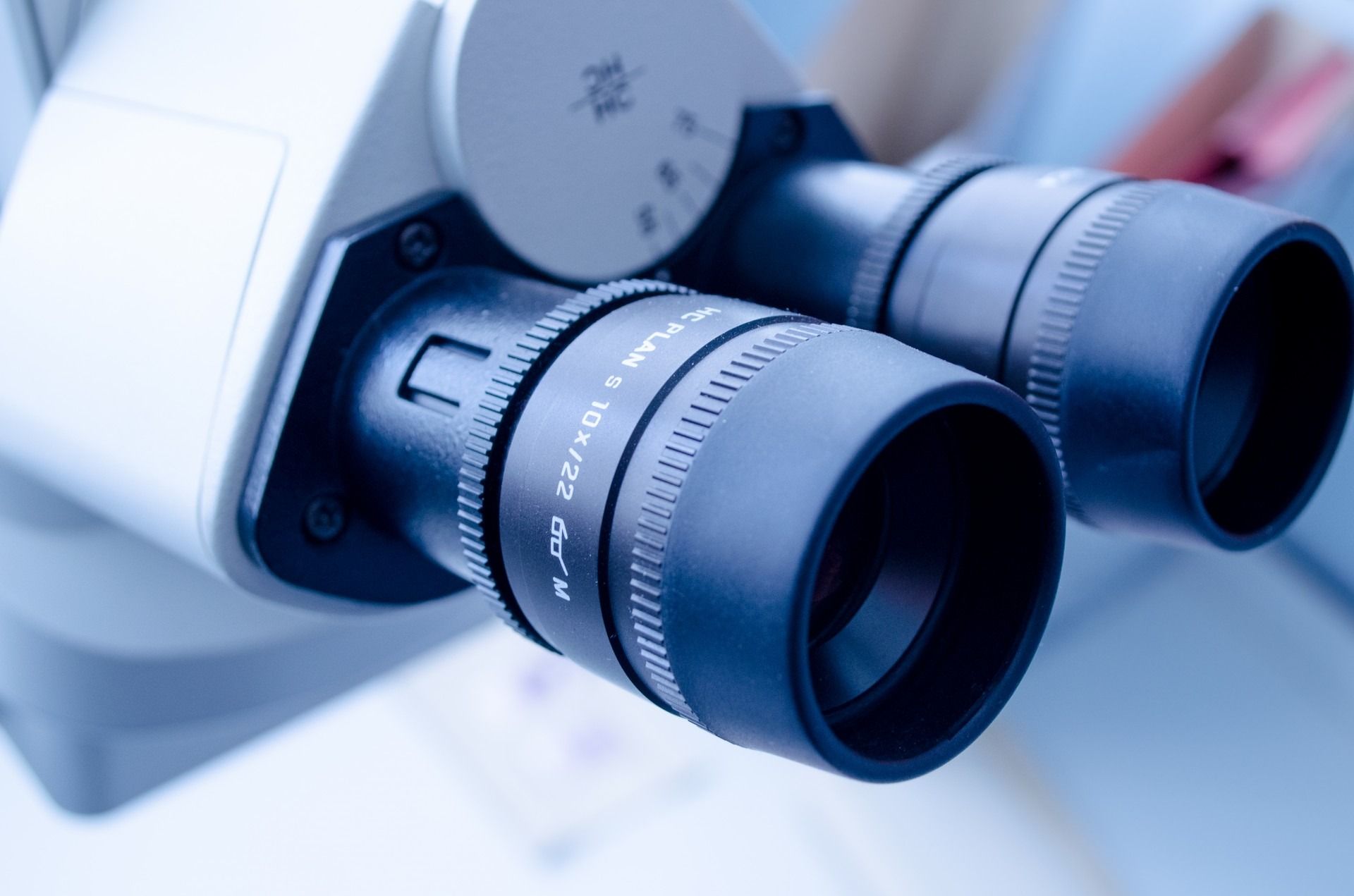
Close-up view of the eyepiece of a microscope, featuring two black cylindrical lenses. The microscope’s body is in the background, indicating a laboratory setting. The overall image conveys a focus on scientific observation and examination.
A hand holding a pen is writing on a clipboard filled with documents. The hand has neatly manicured nails. The focus is on the act of writing, suggesting a task involving paperwork or note-taking.