Intrauterine insemination
Intrauterine insemination offers a relatively simple form of assisted fertilisation, in which sperm are transferred directly into the uterus.
Intrauterine insemination offers a relatively simple form of assisted fertilisation, in which sperm are transferred directly into the uterus.

In intrauterine insemination, previously selected sperm from the partner are introduced into the uterine cavity using a thin cannula. It is a simple treatment with few side effects. The chances of success are limited. In contrast to earlier assumptions, several large international studies unfortunately show very limited pregnancy rates, even with additional ovarian stimulation – well below 10% per treatment cycle. If there are no other limitations in both partners, then this procedure is only useful for very few indications – ejaculation and erectile dysfunction, anatomically severe cervical factor, use of donor sperm, etc. In view of the low success rate, patients should not be older than 35 years and the desire to have children should not date back significantly more than one to two years.
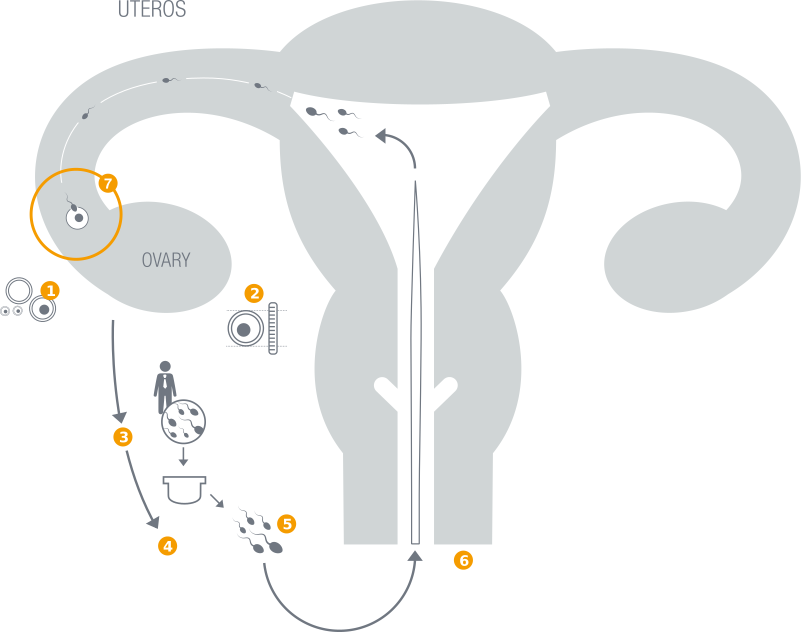
In artificial insemination, previously selected sperm from the partner is inserted into the uterus.
Exploiting the effect of hormones
In the first step of intrauterine insemination, several follicles are brought to maturation by controlled hyperstimulation. A number of further steps follow.
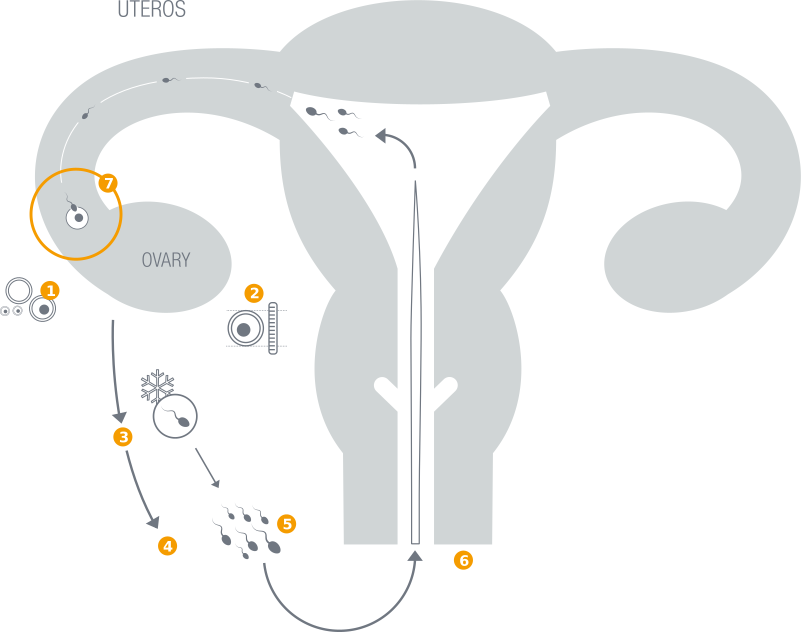
In artificial insemination with donor sperm, sperm from a sperm bank is inserted into the uterus.
Heterologous insemination
If there is a complete absence of sperm from the partner, e.g. as a result of illness, surgery or radiotherapy, intrauterine insemination can also be performed with donor sperm (so-called heterologous insemination). We will be happy to advise you about this possibility.
1.Promotion of oocyte maturation
For intrauterine insemination, several follicles must be brought to maturation by hyperstimulation with the drugs clomiphene, FSH or HMG.
2.Monitoring egg maturation
By ultrasound and blood test
At the beginning of the treatment we examine by ultrasound whether everything is in order. During the stimulation treatment, the growing follicles are also checked by ultrasound. In parallel, we measure the hormone estradiol (E2) in the blood, possibly also LH and progesterone.
3.Triggering ovulation
Preparation for insemination
As soon as the hormone and ultrasound tests show the appropriate values, we trigger ovulation by injecting hCG (instead of natural LH).
4.Sperm extraction
Getting the sperm to the laboratory
quickly and germ-free It is crucial that the sperm is germ-free on the day of fertilisation two hours before the partner's appointment. It can also be obtained at home - but must then be brought immediately to our laboratory. There, the sperm is cleaned and concentrated using special processing methods (gradient centrifugation-swim-up method).
5.Selection
Ensuring sperm quality
We select the optimal sperm and prepare the sperm sample for insemination.
6.Insemination
Transfer of sperm into the uterine cavity
At the time of ovulation, we transfer the specially prepared "washed" partner sperm (so-called homologous insemination) directly into the uterine cavity using a syringe and a thin catheter. Insemination is mainly used in cases of slightly reduced male fertility. The same applies to abnormalities in the area of the cervix, which hinder the ascent of sperm into the uterine cavity.
Book a first consultationRegister for the information evening